

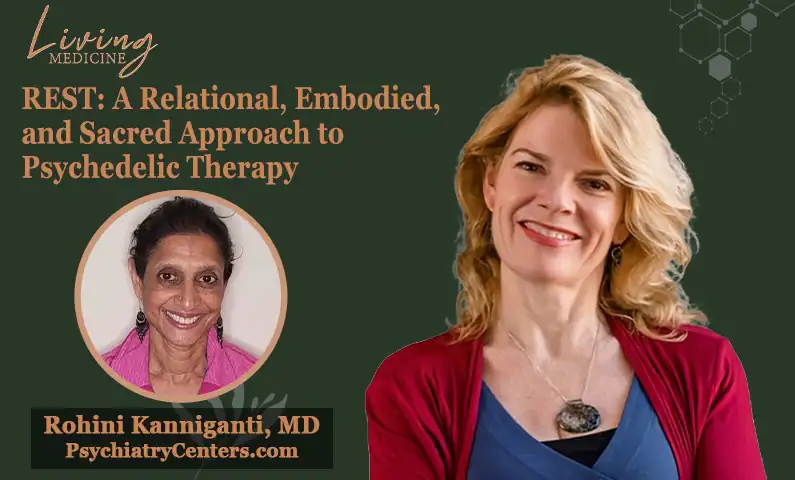
Rohini Kanniganti, MD, MSPH, HMDC, is the Associate Medical Director at Mountain Valley Hospice and Palliative Care, which provides end-of-life and serious-illness care in North Carolina. A board-certified family physician with more than a decade in hospice and palliative medicine, she also works with Trail Winds Hospice and serves on the faculty of the Integrative Psychiatry Institute. Dr. Kanniganti’s expertise spans ketamine and psychedelic-assisted therapies, integrative psychiatry, and relational, embodied approaches to easing pain, existential distress, and fear at the end of life.




Here’s a glimpse of what you’ll learn:
- [4:40] Dr. Rohini Kanniganti’s journey into medicine, hospice care, and psychedelic-assisted therapy
- [9:12] How Dr. Kanniganti’s spiritual background shaped her approach to healing and patient care
- [20:17] The role of relationship, community, and connection in the healing process
- [26:53] What nature and Indigenous perspectives can teach us about belonging and interconnectedness
- [31:36] Why mindfulness and self-awareness are only part of the path toward deeper healing
- [34:48] Dr. Kanniganti’s REST framework: relational, embodied, and sacred tending
- [39:19] Approaching death and dying with greater peace, presence, and connection
- [42:45] The potential role of ketamine and psychedelic-assisted therapy in palliative care
- [47:16] Integrating psychedelic experiences through the body, relationships, and ongoing support
- [52:02] Dr. Kanniganti’s guidance for clinicians interested in psychedelic palliative care
In this episode…
Psychedelic therapy is often described as an inward journey, but healing also happens through the body, relationships, and community. Integration can deepen when these connections are treated as part of the therapeutic process. What can change when psychedelic-assisted therapy becomes more relational, embodied, and sacred?
Dr. Rohini Kanniganti, a board-certified family physician specializing in hospice and palliative care and psychedelic-assisted therapy, believes healing deepens through safety, attunement, and connection. Her REST framework — relational, embodied, sacred tending — encourages people to slow down, soften into the body, and tend to what is present rather than trying to transcend it. In palliative care, ketamine-assisted therapy may also help address pain, depression, existential distress, and fear around dying. Dr. Kanniganti’s approach points toward psychedelic care rooted in embodiment, community, and compassionate presence.
In this episode of Living Medicine, Dr. Sandy Newes talks with Rohini Kanniganti, MD, MSPH, HMDC, Associate Medical Director and Physician at Mountain Valley Hospice and Palliative Care, about REST and a relational, embodied approach to psychedelic therapy. Dr. Kanniganti discusses ketamine in palliative care, somatic integration, and the role of connection in healing. She also explores end-of-life care, mindfulness, and approaching death with greater peace.
Resources mentioned in this episode:
Quotable Moments:
- “No two leaves on this planet are the same, even on the same tree.”
- “There is room for the self, and there’s room for the other.”
- “When the heart body is in deep rest, that’s where it starts.”
- “And softening is the way, because we can only heal through a relaxed, open nervous system.”
- “And all of a sudden we start to feel and to perceive from heart intelligence, not head intelligence.”
Action Steps:
- Slow down and soften into the body: Creating a calmer, more open nervous system can make it easier to notice emotions, sensations, and what needs attention.
- Treat healing as relational, not just individual: Building safety, attunement, and connection with others can support deeper closeness, belonging, and emotional integration.
- Practice sacred tending instead of trying to transcend discomfort: Meeting what is present with tenderness and care can help people stay connected to themselves rather than moving away from difficult experiences.
- Integrate psychedelic experiences through the body and relationships: Ongoing somatic and relational support can help insights become more grounded and meaningful beyond the psychedelic session itself.
- Work as part of a larger care team in palliative settings: Coordinating with physicians, therapists, families, and hospice professionals helps keep psychedelic-assisted care connected to the patient’s broader needs and support system.
Sponsor for this episode…
This episode is brought to you by the Living Medicine Institute.
LMI is a training, resource, and membership program educating providers about the legal and safe use of psychedelic-assisted psychotherapy.
To learn more or participate, visit https://livingmedicineinstitute.com.
Powered by Rise25 Podcast Production Company

Leave a Reply
You must be logged in to post a comment.