
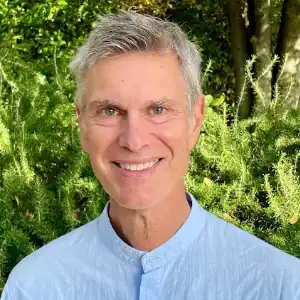
Larry Cammarata, PhD, is the Director of Education at Mindfulness Travels, which offers mindfulness-based retreats and continuing education for health professionals. He also serves as the Director of Training at East Bay Mindfulness Center. A clinical psychologist specializing in mindfulness-based therapy, Larry teaches Tai Chi and Qigong and incorporates improvisation, storytelling, and playful movement into his teaching. He has been recognized by IDEA as an “Author-Expert” for his contributions to mind-body health and contributed to the book A Year of Living Mindfully.


Here’s a glimpse of what you’ll learn:
- [3:18] Larry Cammarata’s journey from Navy psychologist to mindfulness teacher
- [9:07] How synchronized movement fosters connection and emotional well-being
- [12:24] Why psychological flexibility involves embracing discomfort
- [16:21] Lessons from Tai Chi on softening tension and cultivating self-compassion
- [20:37] Larry’s insights into embodied awareness during therapy sessions
- [25:08] What it means to observe thoughts without identifying with them
- [38:12] The role of mindfulness and surrender in psychedelic-assisted psychotherapy
- [44:30] How shifting attention from problems can cultivate joy and well-being
- [54:35] Larry’s practical mindfulness exercises for bodily awareness and self-compassion
In this episode…
It’s easy to get caught in our thoughts and lose touch with our bodies. Mindfulness invites us to notice without needing to change anything. How can movement, play, and self-compassion help us feel more present and open to joy?
According to clinical psychologist and mindfulness teacher Larry Cammarata, well-being starts with noticing, not fixing, our experiences. Drawing on Tai Chi, Qigong, and mindfulness-based therapy, he suggests shifting from racing thoughts to bodily sensations while allowing discomfort and ease. Larry describes psychological flexibility as staying true to our values without chasing comfort. Practices like softening tension, naming emotions without judgment, and moving freely can build awareness and self-compassion. His approach makes joy less about forcing happiness and more about connecting with the present moment and others.
In this episode of Living Medicine, Dr. Sandy Newes sits down with Larry Cammarata, PhD, Director of Education at Mindfulness Travels, to explore mindfulness, embodied awareness, and joy. Larry shares how movement supports emotional connection, why acceptance matters more than chasing comfort, and how play creates space for spontaneity. They also discuss psychedelic-assisted psychotherapy and simple daily mindfulness exercises.
Resources mentioned in this episode:
Quotable Moments:
- “Sometimes I like to say, move outside of the thought stream, and move into the sensory stream.”
- “I think one of the dangers is having an idealized image of how it should be.”
- “Cognitive diffusion has to do with recognizing your thoughts without identifying with them, thereby creating space from the thought.”
- “If I want to feel alive, I’m inhabiting my body with awareness.”
- “Most of us are trained to notice problems, not areas of strength.”
Action Steps:
- Shift from thinking to sensing: Bringing attention to bodily sensations helps create space from racing thoughts and strengthens present-moment awareness.
- Acknowledge emotions without trying to fix them: Naming feelings without judgment encourages acceptance and creates a healthier relationship with difficult experiences.
- Practice softening instead of forcing relaxation: Noticing physical tension with compassion helps cultivate greater ease, self-awareness, and emotional flexibility.
- Incorporate mindful movement into your day: Shaking, stretching, or moving your body with awareness helps reconnect with physical sensations and encourages a sense of aliveness.
- Make room for play and connection: Engaging in spontaneous movement, music, or shared activities helps foster joy, strengthen relationships, and support overall well-being.
Sponsor for this episode…
This episode is brought to you by the Living Medicine Institute.
LMI is a training, resource, and membership program educating providers about the legal and safe use of psychedelic-assisted psychotherapy.
To learn more or participate, visit https://livingmedicineinstitute.com.
Powered by Rise25 Podcast Production Company

Leave a Reply
You must be logged in to post a comment.