
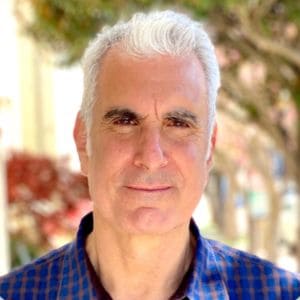
Harvey Schwartz, PhD, is the Co-founder and Psychedelic Psychotherapist at Polaris Insight Center, a San Francisco clinic and training center specializing in ketamine-assisted psychotherapy. A licensed psychologist with more than four decades of experience, he treats complex PTSD, dissociative disorders, and spiritual and therapy-related trauma. Harvey also trains and mentors clinicians, drawing on relational psychodynamic, archetypal, existential, and mindfulness approaches to advance ethical, integrative psychedelic care.




Here’s a glimpse of what you’ll learn:
- [3:25] Harvey Schwartz, PhD, shares his journey from treating dissociative disorders to entering psychedelic-assisted psychotherapy
- [5:47] How a chance MAPS training placement led to the founding of Polaris Insight Center
- [9:52] Why Harvey views the therapeutic relationship — not the medicine — as the foundation for healing
- [14:46] Managing client expectations around breakthroughs and transformational experiences
- [20:34] How to practice accompaniment and uncertainty during psychedelic therapy
- [24:24] The healing value of restoring joy and wonder
- [35:41] How Harvey understands the effects of separation consciousness
- [40:36] Ontological shock after life-changing psychedelic experiences
- [51:23] Creating space for honest feedback within the therapeutic relationship
- [57:34] Harvey’s concerns about the future of psychedelic therapy
In this episode…
Psychedelic therapy can open new viewpoints, but the experience itself is only one part of meaningful change. Lasting healing depends on how the work is integrated within a trustworthy therapeutic relationship. What helps clinicians support transformation without trying to control it?
Psychologist Harvey Schwartz, PhD, argues that clinicians can support transformation through accompaniment rather than control. He encourages therapists to tolerate uncertainty, invite honest feedback, and examine their own countertransference so clients do not have to perform progress for the clinician. Expectation management, community support, and respect for the nonlinear nature of recovery can help clients carry insights into daily life. These practices create a more ethical and deeply human framework for psychedelic care.
In this episode of Living Medicine, Dr. Sandy Newes talks with Harvey Schwartz, PhD, Co-founder and Psychedelic Psychotherapist at Polaris Insight Center, about why relational depth should remain central to psychedelic-assisted psychotherapy. Harvey explains how humility strengthens care, why integration requires community, and what commercialization could cost the field. He also touches on countertransference and the healing role of wonder.
Resources mentioned in this episode:
Quotable Moments:
- “We’re adding a molecule to a therapy relationship to optimize, deepen its capacity for transformation and healing.”
- “Psychedelics are at the crossroads of everything from anthropology to metaphysics to spirituality to biology to psychopharmacology.”
- “You’re lucky because you already knew that experiential learning is where transformation happens.”
- “Wonder, joy, playfulness, spontaneity, improvisation are essential to the healing technology of psychedelic therapy.”
- “I’d also like us all to be aware of the way in which our strengths can be our liabilities.”
Action Steps:
- Center the therapeutic relationship: Treating psychedelic medicine as a tool within psychotherapy helps preserve trust, attunement, and relational safety throughout the healing process.
- Practice comfort with uncertainty: Releasing the need to control or immediately interpret each experience allows clients and therapists to remain curious about what naturally emerges.
- Prepare clients for nonlinear progress: Explaining that healing may include setbacks, confusion, and contraction reduces shame when change does not follow a predictable path.
- Invite honest client feedback: Regularly asking how interventions and interactions are landing strengthens agency and helps therapists recognize their impact within the relationship.
- Build ongoing integration support: Connecting clients with therapy, community, or peer spaces helps them translate meaningful insights into sustainable changes in daily life.
Sponsor for this episode…
This episode is brought to you by the Living Medicine Institute.
LMI is a training, resource, and membership program educating providers about the legal and safe use of psychedelic-assisted psychotherapy.
To learn more or participate, visit https://livingmedicineinstitute.com.
Powered by Rise25 Podcast Production Company

Leave a Reply
You must be logged in to post a comment.