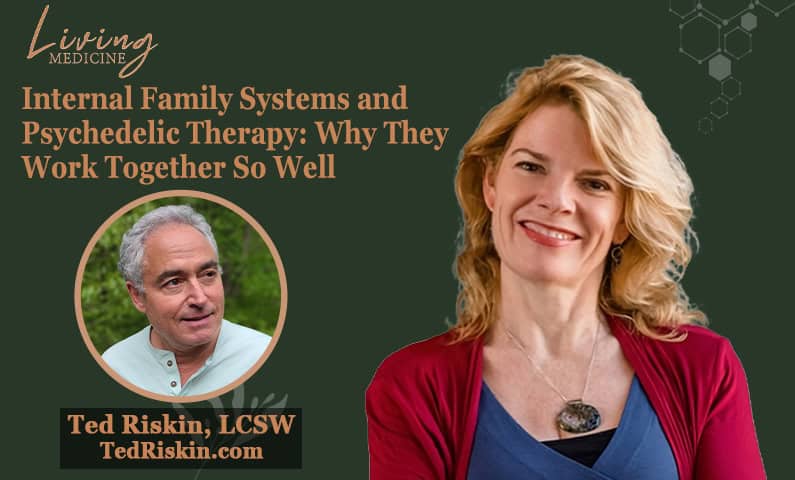
Ted Riskin, LCSW, is the Founder and Lead Psychotherapist at GroupKAP, a program offering ketamine-assisted psychotherapy in a supportive group setting. A psychotherapist specializing in relationship issues and transpersonal therapy, he integrates Internal Family Systems, Holotropic Breathwork, Core Energetics, EMDR, hypnotherapy, and decades of group facilitation. Ted also co-developed Essentials of IFS, where he trains clinicians to apply the model’s techniques with greater skill and confidence.
Here’s a glimpse of what you’ll learn:
- [2:26] Ted Riskin’s path from Holotropic Breathwork training to psychedelic-assisted psychotherapy
- [7:39] What drew Ted to Internal Family Systems after years of body-based therapeutic work
- [10:06] How IFS provides a practical map for understanding the human psyche
- [15:52] The role of self-energy in creating calm and compassionate therapeutic presence
- [21:31] How overwhelming childhood experiences lead vulnerable parts to become exiled
- [32:16] Ted talks about using IFS during an intense ayahuasca experience
- [37:18] When therapists should respect protectors and when gentle intervention may be necessary
- [42:45] The importance of recognizing a therapist’s own parts during client sessions
- [48:13] How group ketamine therapy creates opportunities for relational healing
- [53:31] Ted’s definition of safety as freedom from judgment rather than freedom from conflict
- [59:27] Reconnecting with exiled parts to support lasting emotional healing
In this episode…
Psychedelic experiences can bring vulnerable emotions to the surface while weakening the defenses that usually keep them contained. Effective therapy requires more than accessing those feelings; it also requires a steady, compassionate way to understand and integrate them. How can clinicians support this process without overwhelming the protective systems that help people function?
Psychotherapist Ted Riskin, LCSW, emphasizes building trust with those protective parts rather than treating them as obstacles. Internal Family Systems offers a practical framework for psychedelic-assisted psychotherapy. Clinicians can prepare clients by identifying fears before a medicine session, remain grounded in self-energy during difficult moments, and revisit protectors afterward to reduce anxiety or backlash. Ted also recommends tracking the therapist’s own agenda-driven or approval-seeking parts, since genuine presence creates more room for healing. By combining careful preparation, compassionate witnessing, and thoughtful integration, practitioners can help clients reconnect with their vulnerable parts without forcing the process.
In this episode of Living Medicine, Dr. Sandy Newes talks with Ted Riskin, LCSW, Founder and Lead Psychotherapist at GroupKAP, about integrating Internal Family Systems with psychedelic-assisted psychotherapy. Ted explains how protectors respond to altered states, the importance of self-energy, and how group ketamine work can support relational healing. He also touches on therapist self-awareness, anger, and safety without judgment.
Resources mentioned in this episode:
Quotable Moments:
- “This is how the psyche is organized in these parts.”
- “Self is the space that holds the content or as a witness for whatever the content is.”
- “I think understanding about protectors is helpful because psychedelics tend to be challenging for protectors.”
- “The group itself is like a psychedelic in that it makes the defense not functional.”
- “The safety that matters [is] the safety from judgment and being made wrong.”
Action Steps:
- Check in with protective parts before psychedelic work: Understanding their fears and gaining trust can reduce resistance, anxiety, and post-session backlash.
- Strengthen self-awareness as a practitioner: Noticing approval-seeking, anxious, or agenda-driven parts helps clinicians remain present and avoid imposing their needs on clients.
- Treat preparation and integration as essential: Supporting clients before and after the medicine experience creates greater safety and helps difficult material become meaningful healing.
- Reconnect with exiled parts without forcing them: Compassionate witnessing allows vulnerable emotions and memories to emerge while respecting the system’s capacity to process them.
- Build group safety around freedom from judgment: Allowing honest conflict without making participants wrong supports vulnerability, authentic connection, and new relational experiences.
Sponsor for this episode…
This episode is brought to you by the Living Medicine Institute.
LMI is a training, resource, and membership program educating providers about the legal and safe use of psychedelic-assisted psychotherapy.
To learn more or participate, visit https://livingmedicineinstitute.com.
Powered by Rise25 Podcast Production Company


Leave a Reply
You must be logged in to post a comment.